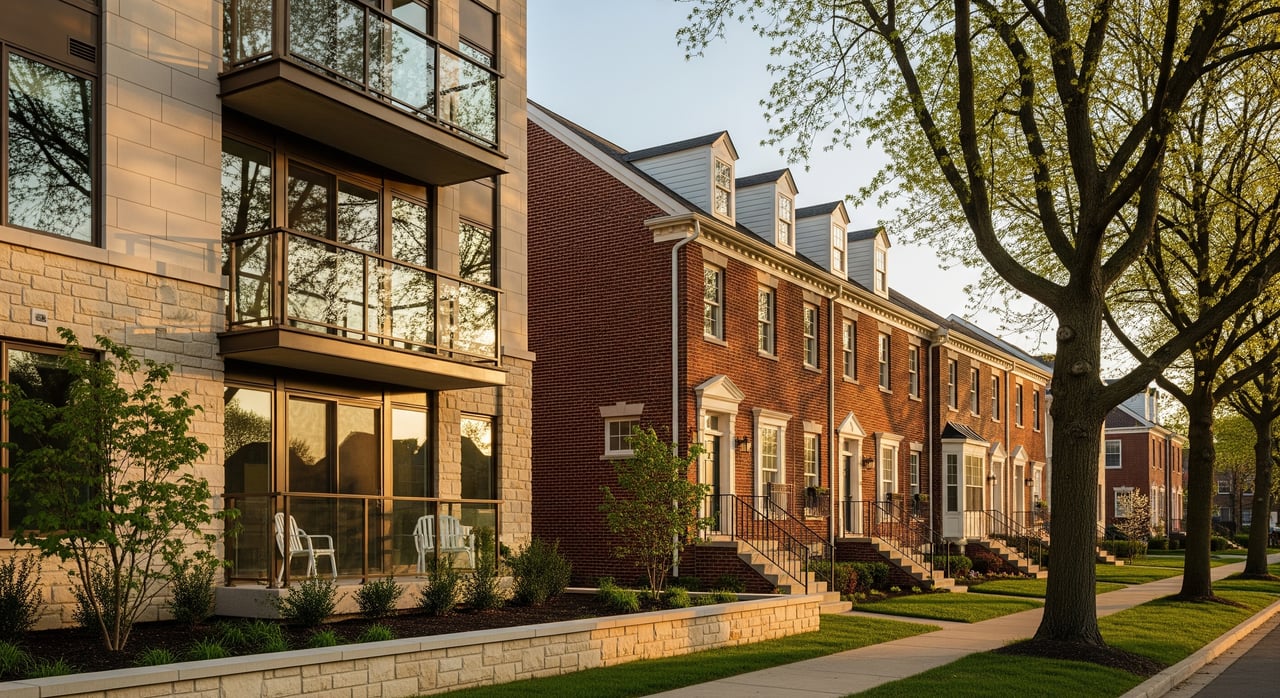
Thinking about low-maintenance living near Uptown Westerville but not sure whether a condo or townhome fits you best? You are not alone. Many buyers love the walkable lifestyle and easy upkeep but want clarity on ownership, fees, and resale. This guide breaks down the key differences in Westerville so you can compare options with confidence and avoid surprises. Let’s dive in.
Quick definitions in Ohio
Condos and townhomes describe different ownership structures, not just building styles. In Ohio, a condominium means you own the interior of your unit plus a shared interest in the common elements, and an association governs the property. A townhome is often fee-simple, where you own the structure and the land, but some townhomes are legally condos or part of a planned community with an HOA. The recorded declaration and community rules control maintenance, insurance, and what fees cover.
Key point: Do not assume “condo means no yard work” or “townhome means you handle everything.” The specific community documents tell the real story.
What you actually own
Condo ownership
- You own the unit interior (often described as the airspace) and a fractional interest in common areas like roofs, exterior walls, landscaping, and amenities.
- A condominium association manages and maintains common elements, guided by recorded declarations and bylaws.
- Your responsibilities typically focus on the interior finishes and systems located entirely within your unit boundaries.
Townhome ownership
- Many Westerville-area townhomes are fee-simple, so you may own the structure plus the land up to your lot lines. Some townhome developments are organized as condominiums or hybrids, so do not assume.
- If there is an HOA, covenants may set standards for exteriors, parking, and common area care. You might handle your roof and siding, or the HOA might. It depends on the documents.
- The legal form drives who maintains and insures exterior elements and how assessments are levied.
Maintenance and what fees cover
Typical condo maintenance
- Associations usually handle exterior maintenance, roofs, common systems, landscaping, and snow removal for shared areas.
- You handle interior finishes, plus any systems located wholly inside the unit boundaries.
- Many condos bundle certain utilities for common areas and sometimes water or trash in monthly dues.
Typical townhome maintenance
- In fee-simple setups, you often maintain your home’s exterior, including the roof, siding, windows, and sometimes driveways.
- The HOA, if present, often maintains shared landscaping, private roads, and amenities.
- Some townhome associations do take on exterior maintenance, which can make fees look similar to condos.
Questions to ask about maintenance
- Who pays for roof replacement and exterior painting?
- Who handles siding, windows, and driveway repairs?
- Is snow removal included for private drives and sidewalks?
- Which utilities are included in dues, if any?
HOA fees, reserves, and assessments
What you pay depends on services and amenities. Communities that include lawn care, trash, exterior upkeep, and amenities often have higher dues. The budget should also include contributions to reserves for big-ticket projects like roof replacement or paving.
- Review the current budget, reserve study, and financial statements.
- Look at the history of special assessments, if any.
- Confirm what your monthly fee covers and what it does not.
Communities with solid reserves and clear plans for capital projects tend to be more predictable and can be easier to finance and resell.
Insurance and taxes
Insurance by property type
- Condo owners typically carry an HO-6 policy that covers interior improvements, personal property, liability, and loss assessment coverage. The association’s master policy usually covers common elements and the exterior.
- Fee-simple townhome owners commonly carry an HO-3 policy that insures the structure and exterior. If the townhome is legally a condo, you would likely need an HO-6 instead.
- Confirm whether the master policy is all-in or bare-walls, and verify deductibles, liability coverage, and whether the association carries fidelity coverage.
Property taxes in Franklin County
- Both condos and townhomes are real property subject to county property taxes. The Franklin County Auditor assesses values based on market data.
- Tax amounts vary by the assessed value and classification of the property, not just ownership type.
Utilities and city services in Westerville
- Some condo associations include water or trash in dues. Townhome owners may have separate accounts.
- The City of Westerville maintains public streets, while HOAs typically handle private roads and drives.
Financing differences you should know
Lenders evaluate condos differently than fee-simple homes. Condo loans can involve a project review to confirm eligibility under standards used by Fannie Mae, Freddie Mac, FHA, or VA. Some FHA or VA buyers may face fewer options if a condo project lacks the required approvals.
- Conventional loans are common for condos, but the lender may still review the project.
- Fee-simple townhomes are often financed like detached single-family homes.
- Ask your lender early about condo project eligibility, spot approvals, and any overlays that may apply.
Resale and value in Westerville
Value depends on location, condition, and the health of the association. Proximity to Uptown Westerville, walkability, and access to shopping and events can increase demand for attached living. Condos sometimes trade at a discount compared with fee-simple homes due to perceived restrictions or fees, but strong amenities and prime locations can offset that.
- A well-funded, well-managed community can be easier to market and finance.
- Rental rules and owner-occupancy levels can influence the buyer pool.
- Appraisals look closely at recent comparable sales, association financials, and location factors.
Local factors to consider
- Uptown Westerville offers a walkable historic center with popular shops, restaurants, and events. Attached homes near Uptown often appeal to buyers who value convenience and lower maintenance.
- Many buyers review whether a property is within the Westerville City School District. Always verify school boundaries directly with the district.
- Commute access to I-270, SR-315, and nearby employment corridors can shape what you prioritize.
- For exterior changes or improvements, check both the HOA’s architectural rules and local permit requirements with the City of Westerville’s Planning and Zoning Division.
Due diligence checklist
Request these items from the seller or HOA before you commit:
- Recorded declaration, CC&Rs, bylaws, rules, and any amendments
- Recent meeting minutes, budget, financial statements, and bank statements
- Reserve study and reserve funding history
- Current assessments and any history of special assessments
- Association insurance certificates and owner insurance requirements
- Rules on rentals, pets, parking, storage, and use of common elements
- Any pending or recent litigation, planned projects, or deferred maintenance
- Management agreement if professionally managed
Also do this:
- Order a home inspection and ask about the age and condition of roofs, siding, paving, and building envelopes.
- Ask about completed capital replacements and upcoming expenditures.
- Talk with your lender about project eligibility and with your title company about any liens or easements.
- Verify tax and sales history through the Franklin County Auditor and obtain recorded documents from the Franklin County Recorder.
Which is right for you?
Choose a condo if you want the association to handle most exterior maintenance and you are comfortable with community rules and shared decision-making. This can be a good fit if you want a smaller footprint near Uptown and prefer predictable upkeep.
Choose a townhome if you want attached living with more control over the structure and land, and you do not mind taking on exterior maintenance if required. This can feel closer to single-family ownership while still offering community benefits.
If you want a personalized comparison for a specific Westerville community, connect with a local expert who can review the documents and walk you through the tradeoffs.
Ready to find the right fit near Uptown or across Westerville? Reach out to Sarah Berlin Moore for a clear, side-by-side look at maintenance, fees, insurance, and financing options tailored to your budget and lifestyle. When you are ready, connect with Sarah Berlin Moore to get started.
FAQs
What is the main ownership difference between condos and townhomes?
- Condos typically include ownership of the unit interior plus a shared interest in common areas, while many townhomes are fee-simple, meaning you own the structure and the land, subject to the specific community documents.
How do HOA fees for Westerville condos and townhomes compare?
- Fees vary by services and amenities; townhomes with HOA-provided exterior maintenance can have fees similar to condos, while fee-simple townhomes with fewer shared services may have lower dues.
Who pays for roof replacement in a Westerville condo or townhome?
- It depends on the governing documents; many condos fund roof replacement through the association, while fee-simple townhome owners often pay for their own roofs unless the HOA assumes that responsibility.
What insurance do I need for each property type in Franklin County?
- Condo owners usually carry an HO-6 policy for interior coverage and assessments, while fee-simple townhome owners generally carry an HO-3 policy that includes the structure and exterior; always confirm what the association’s master policy covers.
Are condos harder to finance than townhomes in Westerville?
- Some condos require project approvals for FHA or VA loans, which can limit options for certain borrowers; fee-simple townhomes are typically financed like single-family homes.
What local records should I check before buying in Westerville?
- Review property tax and sales history with the Franklin County Auditor, recorded declarations and CC&Rs with the Franklin County Recorder, and permit or zoning details with the City of Westerville’s Planning and Zoning Division.