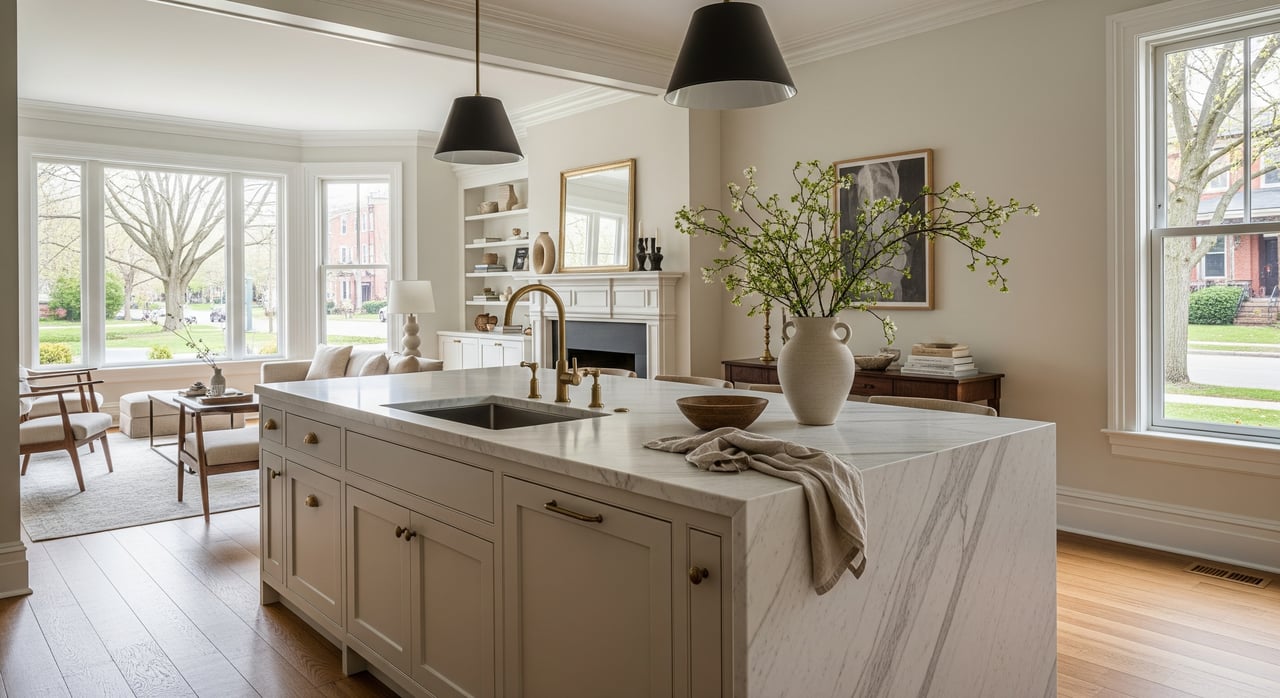
Thinking about opening up your kitchen or keeping classic rooms with doors that close? In Upper Arlington, the right layout can shape your daily routine, comfort, and resale strategy. You want a home that feels good, functions well, and fits the neighborhood. In this guide, you’ll see how open-concept and traditional floor plans compare, what renovations involve locally, and how to decide what works best for you. Let’s dive in.
Open-concept in Upper Arlington
Open-concept living combines kitchen, dining, and living spaces into one larger area. In Upper Arlington’s early-to-mid 20th century homes, this often means removing a wall between the kitchen and a formal dining or living room.
Why people choose it
- Better sightlines and easy interaction among spaces.
- More daylight can reach deeper into the home, which can help smaller rooms feel bigger.
- Flexible zones for entertaining, homework, and casual meals.
What to watch for
- Sound travels. Kitchen clatter and TV noise can carry through the whole main level.
- Less wall space can reduce storage or display areas without thoughtful cabinetry or built-ins.
- HVAC may need adjustments to keep one large space comfortable year-round.
Traditional layout in Upper Arlington
Many Upper Arlington homes were designed with defined rooms and formal circulation. You’ll see separate living and dining rooms, a closed kitchen, and clear entryways.
Why people choose it
- Quiet, enclosed rooms support work, sleep, and varied schedules.
- Classic entertaining flow with a separate dining room feels intentional and cohesive with period architecture.
- More nooks and wall space often mean better built-in storage opportunities.
What to watch for
- Some rooms may be darker if windows are limited to one side.
- Daylight and airflow do not travel as far without openings or transoms.
- Older layouts might lack a modern pantry or mudroom unless updated.
Side-by-side comparison
Natural light and daylighting
- Open-concept: Light from multiple windows can travel farther with fewer walls, which can make the main level feel larger. If existing windows are small or limited, you may still need to add or enlarge windows for a true brightness boost, which can require permits and review.
- Traditional: With defined rooms, light is more contained. Brightness can be improved with targeted changes like larger windows, transoms, or interior openings.
Sightlines, flow, and entertaining
- Open-concept: You can cook, host, and supervise at the same time. It often suits multitasking.
- Traditional: Formal spaces create a classic hosting sequence and can feel polished for sit-down dinners.
Noise and privacy
- Open-concept: Sound carries easily, which can be challenging if family members work from home or keep different hours.
- Traditional: Closed rooms help with concentration, naps, and quiet evenings.
- Mitigation for either layout: Add doors where practical, use acoustic insulation, incorporate rugs and soft furnishings, and consider sound-dampening materials.
Storage and circulation
- Open-concept: Removing walls can reduce wall space for cabinets or bookcases. Islands and well-planned pantries help, but seating and traffic flow require careful design.
- Traditional: You often have more places to tuck closets or built-ins, though older kitchens may not include a modern pantry or mudroom without renovation.
Mechanical systems and energy
- Open-concept: One large space may need HVAC recalibration, different ducting, or zoning to stay comfortable.
- Traditional: Smaller rooms can be easier to heat or cool, but overall efficiency depends on insulation, windows, and system quality.
- Moves that add cost in either case: Relocating kitchens or baths, rerouting plumbing, and changing gas lines or venting.
Resale and neighborhood fit
- Open-concept: Popular, especially where many homes have been renovated. Balance matters. If the exterior is classic, buyers may prefer an interior that still nods to the home’s character.
- Traditional: In streets with many intact period homes, buyers may prize original room definitions and details. A cohesive feel often helps marketability.
- Smart move: Review nearby comps to see which layouts are drawing attention in your part of Upper Arlington.
Renovation realities in Upper Arlington
If you are considering opening walls or reconfiguring rooms, plan for structure, permits, and timeline.
Permits and possible review
- Structural changes, new or enlarged window openings, and relocating plumbing or electrical typically require a building permit from the City of Upper Arlington.
- Some properties may be subject to architectural or historic review, especially for changes that affect exterior character or prominent features.
- Verify requirements before you start. Unpermitted work can complicate resale and inspections.
Structure and safety
- Non-load-bearing wall removal is usually simpler.
- Load-bearing walls require engineered solutions like beams or headers, along with professional oversight.
- Older framing can be unconventional, and hidden issues like rot can appear. Confirm conditions with a structural engineer or licensed contractor before demolition.
Typical conversion paths
- Create a larger cased opening or pass-through with a header to boost sightlines while keeping some separation.
- Install pocket or sliding doors to toggle between open and closed.
- Combine kitchen and dining if a non-load-bearing wall allows.
- Remove a load-bearing wall with an engineered beam for a bigger open area.
- Reconfigure the kitchen within its footprint to improve function without major structural work.
- Add light with skylights, clerestory windows, or interior transoms where appropriate.
- Build a mudroom or butler’s pantry to gain storage without fully opening everything.
Cost and timeline basics
- Scope drives cost. Pass-throughs and non-structural updates are generally less expensive.
- Structural changes, window moves, and plumbing or gas-line relocations increase cost.
- Expect time for design, permits, demolition, structural work, MEP changes, inspections, and finishes. Discovery work can add time in older homes.
Tips for buyers touring Upper Arlington homes
- Ask about structure: If you see a large new opening, visible beams, or patched flooring, request permit records and any engineering reports.
- Walk for light: Visit at different times of day to see how daylight moves through the home and whether interior spaces borrow light.
- Listen for noise: Stand in bedrooms and potential office spaces. Note sound from the kitchen, family room, or garage.
- Check storage: Look for a pantry, closet sizes, and mudroom or drop zones.
- Review mechanicals: Ask if there are multiple HVAC zones and whether vents adequately serve larger open areas.
- Confirm restrictions: Ask about any historic or architectural review history that could limit future changes.
Smart moves for sellers before listing
- Review comps: See whether open-plan renovations are getting a premium in your part of Upper Arlington. A comparative market analysis can guide timing and scope.
- Consider light-touch updates: If the goal is market appeal, a larger cased opening, better staging, or strategic furniture placement may improve flow without a full tear-out.
- Document everything: Keep permits, inspections, and engineering letters for any significant changes. Transparency builds buyer trust.
- Use factual listing language: For example, “open-concept kitchen and family room” or “formal living and dining rooms.”
Questions to ask contractors and inspectors
- Is the wall load-bearing, and can you provide engineering documentation?
- What permits are required for this scope in Upper Arlington?
- Will HVAC zoning or ducting need modification for comfort and efficiency?
- Are there historic or neighborhood constraints to plan around?
- What contingency budget and timeline do you recommend for an older home?
Which layout fits you?
Start with how you live today, and how you want to live over the next few years.
- If you value together-time, sightlines, and flexible entertaining, an open kitchen-living area can feel right.
- If you need quiet zones for working, studying, or sleeping, defined rooms can reduce stress and help routine.
- If you love character, traditional layouts with preserved period details can align with the architecture and neighborhood feel.
- If you want modern function inside a classic shell, a hybrid plan with wider openings, pocket doors, and a smart pantry may give you both.
The best answer is often a balanced one. A thoughtful opening, better lighting, and a storage add-on can deliver function without losing the home’s original charm.
If you want a tailored plan for your address or your home search in Upper Arlington, I’m here to help with a data-informed market read, staging guidance, and a clear path to your goals. Reach out to Sarah Berlin Moore for a neighborhood-focused consult.
FAQs
What is the difference between open-concept and traditional layouts in Upper Arlington?
- Open-concept joins kitchen, dining, and living spaces to improve flow and light, while traditional layouts keep defined rooms that support privacy, storage, and classic entertaining.
Do you need a permit to remove a wall in Upper Arlington?
- Structural changes and most electrical or plumbing work typically require a building permit, and some homes may need architectural or historic review. Verify requirements before starting.
Does an open kitchen improve resale in Upper Arlington?
- It can help, especially where renovated homes are common, but neighborhood context matters. Review nearby comps to see what buyers are choosing in your submarket.
How can you reduce noise if you prefer open-concept living?
- Add rugs and soft furnishings, consider acoustic insulation or resilient channels, and use doors or partial separations where practical to dampen sound.
How do you know if a wall is load-bearing in an older Upper Arlington home?
- Do not guess. Have a structural engineer or licensed contractor evaluate and provide documentation before demolition, especially given older framing quirks.
How long do open-plan renovations take locally?
- Timelines vary by scope and permitting. Plan for design, permits, demolition, structure, MEP work, inspections, and finishes, with extra time for discoveries common in older homes.