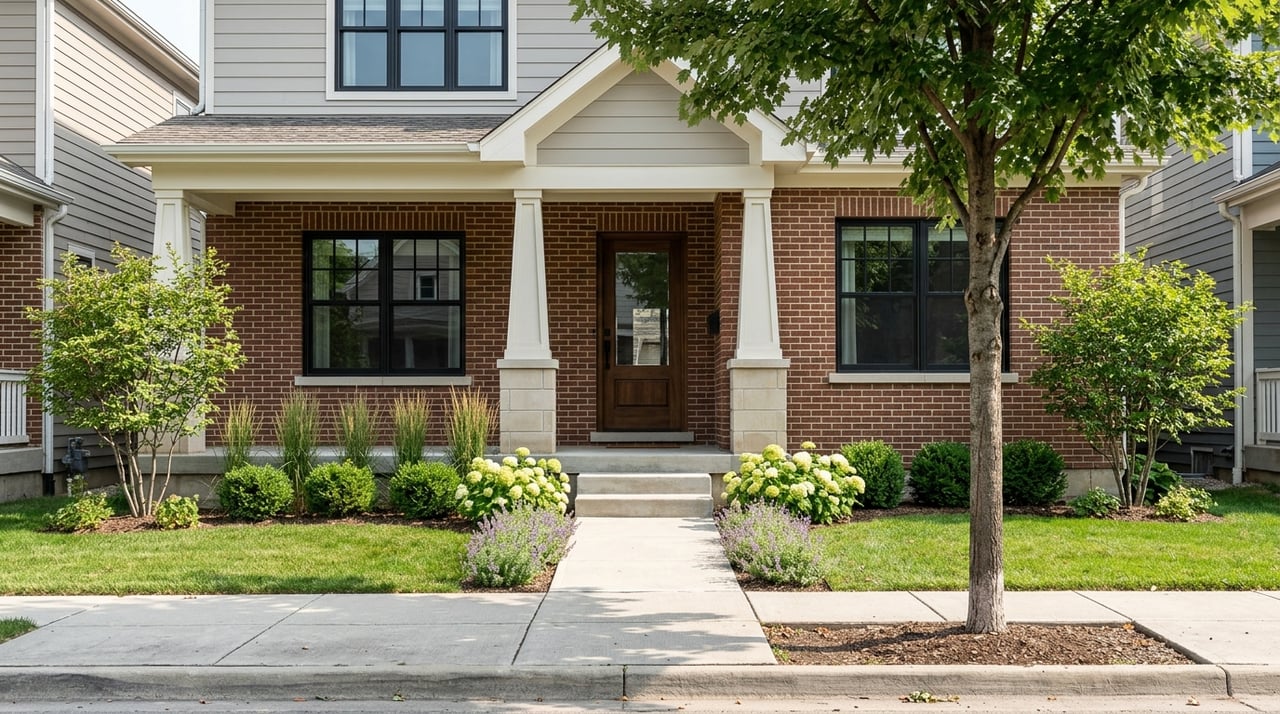
Wondering where you can actually live a more walkable lifestyle in Columbus? That is a smart question to ask before you buy, because Columbus is not uniformly walkable and the experience can change a lot from one block to the next. If you want to spend less time in the car and more time walking to coffee, parks, restaurants, or daily errands, this guide will help you narrow your search. Let’s dive in.
Why walkability matters in Columbus
Columbus has an overall Walk Score of 41, which means walkability is limited across the city as a whole. The most walkable areas are mostly clustered in the central urban core and a few close-in neighborhoods.
That is why neighborhood-level research matters, but block-level research matters even more. Two homes in the same area can offer very different day-to-day routines depending on how close you are to shops, parks, and connected streets.
Walk Score is a useful starting point because it looks at nearby amenities, block length, and intersection density. It gives the most weight to places you can reach within about a 5-minute walk, so convenience is not just about distance on a map. Route quality matters too.
Columbus neighborhoods worth exploring
If walkability is high on your wish list, a few Columbus neighborhoods stand out right away. Each one offers a different kind of lifestyle, from dense urban living to quieter residential pockets with walkable stretches.
Short North, Italian Village, and Victorian Village
This is the strongest cluster for buyers who want the most walkable urban lifestyle in Columbus. Short North has a Walk Score of 95, Italian Village is 90, and Victorian Village is 88.
Short North Alliance describes the district as home to more than 300 independent shops, local restaurants, and art-focused experiences. Nearby green spaces include Goodale Park, Italian Village Park, and Poplar Park, which adds some balance to the urban setting.
Italian Village is also described as a well-connected neighborhood with shops, nonprofits, and eateries, especially along High Street. If you want a car-light lifestyle with easy access to dining and everyday outings, this area deserves a spot near the top of your list.
German Village and the Brewery District
German Village has a Walk Score of 90, and the Brewery District comes in at 85. For buyers drawn to historic character and a strong sense of place, this part of Columbus is worth serious consideration.
Experience Columbus describes German Village as known for brick homes, brick-lined streets, pastry and coffee shops, the 32-room Book Loft, and Schiller Park. The Brewery District adds entertainment and dining along High Street, along with Shadowbox Live.
Together, these neighborhoods can appeal to buyers who want frequent opportunities to walk to dinner, coffee, or a park while enjoying a historic setting. If that mix sounds appealing, this is a great area to tour in person.
Downtown Columbus
Downtown Columbus has a Walk Score of 82 and a Transit Score of 62, which makes it one of the stronger choices if you want both walkability and transit access. That can be especially helpful if you want to reduce how often you drive.
Experience Columbus describes Downtown as a metropolitan hub with culinary destinations, cultural and educational institutions, waterfront activities, community green space, Columbus Commons, and Topiary Park. Downtown Columbus, Inc. also points to Gay Street as a dense stretch of bars, galleries, restaurants, retail shops, and cafes.
If you are considering a condo or loft and want dense everyday access to amenities, Downtown is a practical place to start. It offers one of the clearest examples of an urban, on-foot lifestyle in Columbus.
Grandview Heights
Grandview Heights has a Walk Score of 76 and offers a different feel than the neighborhoods in the urban core. It is close to downtown, but it is often seen as a more small-scale, close-in option.
The City of Grandview Heights describes the community as walkable and sustainable, with parks, tennis courts, a pool complex, and multi-purpose paths. It also notes tree-lined walkable streets, shops, and dining.
Experience Columbus adds that Grandview includes coffee shops, restaurants, boutiques, and neighborhood events like the Grandview Hop. If you want proximity to downtown without committing to the densest urban environment, Grandview Heights is a smart area to explore.
Clintonville
Clintonville is a good reminder that averages do not tell the whole story. Central Clintonville has a neighborhood Walk Score of 56, but a specific location in the neighborhood scores 79.
That difference shows why exact address and street placement matter so much. The City of Columbus Clintonville Neighborhood Plan notes the area’s historic commercial and residential patterns are walkable and emphasizes pedestrian-friendly entrances, crosswalks, bike racks, and development focused on High Street and Indianola Avenue.
Experience Columbus highlights destinations like Whetstone Park of Roses, Global Gallery Coffee Shop, The Galaxy Coffee, and nearby restaurants, stores, and breweries. If you want a more residential feel with walkable pockets, Clintonville can be a very strong fit, but you will want to be selective about the specific block.
Olde Towne East
Olde Towne East has a Walk Score of 73 and offers another option for buyers looking for older housing stock and an evolving amenity base. It is one of the more interesting neighborhoods to research if you want character and close-in access.
Experience Columbus describes the area as a historic neighborhood with dining and nightlife along Parsons Avenue and Oak Street. It also points to nearby East Market in Franklin Park, Franklin Park Conservatory and Botanical Gardens, Upper Cup Coffee, Gemüt Biergarten, the King Arts Complex, and other neighborhood businesses.
For some buyers, Olde Towne East can strike a nice balance between historic setting and growing convenience. It is a neighborhood where walking options may continue to depend on the exact street and proximity to activity centers.
How to compare walkable blocks
Once you have a shortlist, the next step is to test how a neighborhood feels on the ground. A strong neighborhood score is helpful, but it does not replace an in-person walk.
A simple way to evaluate a block is to walk from the front door to a few everyday destinations:
- A grocery stop
- A coffee shop
- A park
- A transit stop
As you do that, pay attention to more than distance. Notice the sidewalks, street crossings, block length, and how connected the route feels.
This matters in Columbus because route quality can change fast from one street to the next. Clintonville is the clearest example in this group, where one location can feel much more walkable than the neighborhood average suggests.
Transit can sharpen your search
If your goal is not just walkability but also a more car-light lifestyle, transit can help you narrow the field. In this group, Downtown Columbus stands out with a Transit Score of 62.
Short North and Italian Village are both in the mid-50s for Transit Score, while German Village is 54 and Olde Towne East is around 49. That does not mean one area is automatically better than another, but it can help you match the neighborhood to your daily routine.
For example, if you expect to rely more on transit for commuting or regular trips, Downtown may deserve extra attention. If you care more about walking to restaurants, parks, and local businesses, another neighborhood may fit just as well.
Which Columbus neighborhood fits your lifestyle?
The best walkable Columbus neighborhood for you depends on what you want your day-to-day life to look like. A high Walk Score is helpful, but lifestyle fit matters just as much.
Here is a quick way to think about the shortlist:
- Short North / Italian Village / Victorian Village for the most urban, car-light lifestyle
- German Village / Brewery District for historic character and on-foot dining or errands
- Downtown Columbus for condos, lofts, and stronger transit access
- Grandview Heights for a close-in location with a smaller-scale feel
- Clintonville for a more residential setting with walkable pockets
- Olde Towne East for historic housing and an expanding amenity base
If you are buying in Columbus, this is where neighborhood-level guidance can make a real difference. A home that looks similar on paper can feel very different depending on the block, the route to nearby amenities, and how you actually live each day.
If you want help narrowing down walkable neighborhoods in Columbus and touring the blocks that best match your lifestyle, connect with Sarah Berlin Moore.
FAQs
Which Columbus neighborhood has the highest Walk Score?
- Short North has the highest Walk Score in Columbus at 95, followed by Italian Village and German Village at 90.
Are all parts of Clintonville walkable?
- No. Central Clintonville has a neighborhood Walk Score of 56, but some specific locations score much higher, including one point location at 79.
Is Downtown Columbus a good choice for car-light living?
- Downtown Columbus is one of the stronger options for car-light living because it has a Walk Score of 82 and a Transit Score of 62.
What should buyers check when touring a walkable Columbus neighborhood?
- You should test the exact block by walking to a grocery stop, coffee shop, park, and transit stop while also paying attention to sidewalks, crossings, and route connectivity.
Which Columbus neighborhoods combine walkability and historic character?
- German Village, the Brewery District, and Olde Towne East are strong places to research if you want a walkable setting with historic character.
Is Grandview Heights considered walkable?
- Yes. Grandview Heights has a Walk Score of 76 and is described by the city as a walkable community with parks, paths, shops, and dining.