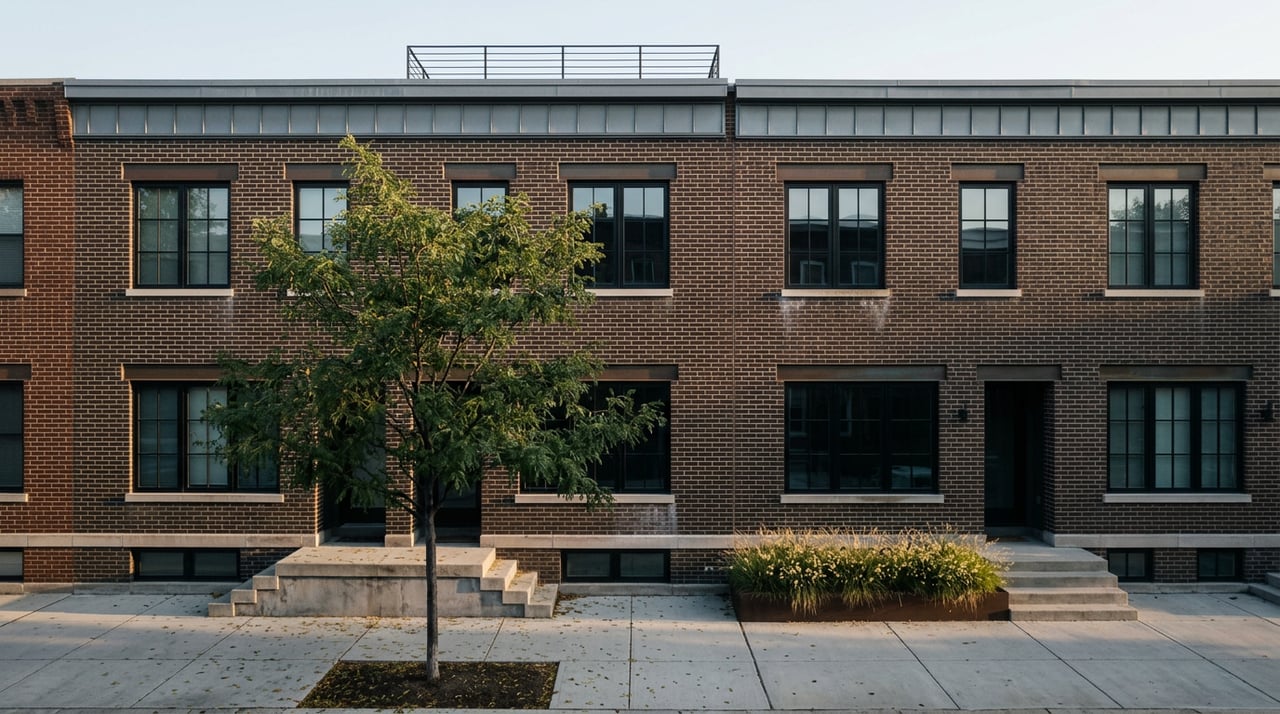
Two listings can sit three blocks apart in Italian Village, wear nearly identical price tags, and cost their new owners wildly different amounts every month. Not because one has a better kitchen or a bigger yard. Because one of them is quietly running down a fifteen-year tax clock that the other already finished, or never started.
I see buyers catch this at the closing table more often than I'd like. Someone falls for a rehabbed rowhouse near Goodale Park, runs the numbers against a new-construction unit at Jeffrey Park, and assumes the cheaper sticker price means the cheaper monthly payment. Then the mortgage estimate comes back and the math is backward. The pricier home has almost no property tax bill right now. The cheaper one is paying full freight. Nobody lied to them. Nobody hid anything on purpose. It's just that the listing sheet doesn't say what year the clock runs out, and most buyers never think to ask.
The tax abatement that only some homes are running
Part of Italian Village, along with pieces of the Short North and Victorian Village, is designated a "market ready" Community Reinvestment Area under the city's housing program, which makes qualifying new construction and substantial rehabs eligible for a fifteen-year, 100 percent property tax exemption on the value the project adds, provided the project includes 10 percent affordable housing or the developer buys out of that requirement. That program runs under state authority (Ohio Revised Code sections 3735.65 through 3735.70) and the city consolidated its post-1994 versions into one Columbus Housing Community Reinvestment Area through Ordinance 3448-2023, which spells out the terms by designation: Market Ready, Ready for Revitalization, and Ready for Opportunity areas.
Here's the part that trips people up. The abatement only ever covers the improvement, the new structure or the renovation work, never the land underneath it. So even a fully abated home still owes tax on the pre-improvement land value every year of the term. And when the term ends, the exemption falls off and the full assessed value becomes taxable, all at once, right when the mortgage servicer recalculates the escrow line.
The clock also doesn't reset when a house resells. It runs from the date the certificate was issued, not the date you bought the home. Which means two nearly identical units built four years apart, both marketed today as "tax abated," can have very different amounts of runway left. Listing language across the neighborhood right now bears this out. Some units advertise abatement through 2028. Others run through 2031. A handful, built more recently, carry abatement through 2034. A buyer comparing three condos at the same price point could be comparing two years of relief left against eight.
| What you might see on a listing | What it actually tells you |
|---|---|
| "Tax abated through 2028" | About two years of exemption left as of 2026, then the improvement value becomes fully taxable |
| "Tax abated through 2031" | Roughly five years of runway, still inside the fifteen-year window |
| "Tax abated through 2034" or "100% abatement" on new construction | Close to the full term remaining, likely a recent certificate |
| No abatement mentioned | Either an older home outside the CRA boundary, or one where the term already expired |
None of this shows up as a line item you can compare at a glance. It shows up in a recorded agreement, an ordinance number, and a certificate the Franklin County Auditor's office ties to the parcel. The city's own open data portal maps which residential parcels currently sit inside a Community Reinvestment Area, which is the fastest way to confirm whether a specific address even qualifies before you fall for it.
Why the median price is lying to you this year, too
There's a second mechanism working alongside the tax clock, and it compounds the confusion instead of clearing it up.
Italian Village doesn't sell a lot of homes in any given month. One tracking service logged only about seven house sales in the neighborhood over a recent month, while listing separately 25 condos, one townhouse, and two multi-family units on the market that same month. That's a small enough sample that one or two luxury new-construction closings, the kind carrying that fresh fifteen-year abatement, can swing the reported median hard in either direction.
You can see it happen in real time if you check more than one source. As of June 2026, one tracker put the median sale price across all home types in Italian Village at roughly $560,000, up more than 21 percent year over year. Look at a different portal's numbers for the same window and you'll find a median list price closer to $620,000, a different median sale price around $580,000 (up 4 percent), and yet another metric, the trailing twelve-month median, sitting near $485,000 and down 8 percent. Same neighborhood, same rough period, three different stories, because each number is built from a slightly different slice of a very small pool of transactions.
Meanwhile homes here are sitting on the market a long time for a neighborhood supposedly heating up. Multiple trackers put the average around 105 to 126 days as of mid-2026, compared with a national average closer to half that. Rising headline prices and slow-moving inventory sound like a contradiction until you remember the mix. A few tax-abated new builds sell at a premium and pull the median upward. Meanwhile the older, non-abated rowhouses and duplexes, the ones already carrying full property tax, sit for months waiting on a buyer who's comparing sticker price without comparing carrying cost.
This is the part that matters if you're cross-shopping neighborhoods. A median price is a description of what happened to sell last month, not a promise of what your monthly payment will be. In a market this thin, treat any single median you see quoted for Italian Village as a snapshot, not a forecast, and go check the specific parcel before you anchor on it.
What to actually ask before you compare two listings
If you're weighing a home here against something in Victorian Village, Short North, or elsewhere downtown, the sticker price is the least useful number on the page. Before you compare two listings side by side, ask for:
- The recorded CRA exemption certificate and the ordinance number that authorized it
- How many years remain on the abatement term, not just whether it's abated
- Whether the agreement requires owner occupancy, since some abatements apply only if you live in the home
- Whether the abatement transfers to you on resale, or whether the original owner's exit ends it
- The current land value versus improvement value split from the Franklin County Auditor's parcel record, which tells you roughly how much of the bill the abatement is actually covering right now
That last one matters more than people expect. A property with a high land value and a modest improvement gets a smaller real benefit from the exemption than a property where most of the assessed value sits in new construction. Two "100% abated" homes can still carry different effective tax bills today, before the term even ends.
There's also a broader backdrop worth knowing if you're deciding between an abated and non-abated home this year specifically. Ohio lawmakers signed a package of property tax relief bills in December 2025 aimed at slowing how quickly rising valuations flow into tax bills, taking effect on 2026 bills. Franklin County is also in the middle of its triennial reassessment this year, with updated values going out to owners now and any bill changes from that reassessment landing in 2027. Combine that with a fifteen-year abatement clock running on a different schedule for every parcel, and the honest answer is that nobody's property tax number in this neighborhood is fixed for long. It's worth checking where each specific home sits relative to both timelines before you sign anything.
A few questions I hear often
Does the tax abatement disappear if I buy a resale instead of new construction? Not automatically. Most agreements run with the property for the remaining term, but you have to confirm the recorded agreement actually allows transfer on sale rather than terminating when the original owner moves out.
Is the abatement the same everywhere in the neighborhood? No. Terms depend on which CRA designation the parcel falls under, Market Ready, Ready for Revitalization, or Ready for Opportunity, and each carries different requirements around affordable housing set-asides or agreements with the city.
Can I find out how many years are left before I write an offer? Yes. Ask the listing agent for the exemption certificate and ordinance number, then confirm the parcel and its current assessed value on the Franklin County Auditor's site before you finalize your offer.
If you're trying to figure out what a specific Italian Village address will actually cost you to carry, not just what it's listed for, that's the conversation worth having before you write an offer, not after. I walk buyers through exactly this kind of comparison across Italian Village, Victorian Village, and the rest of the Short North corridor all the time. Let's Connect and I'll help you read the fine print before you fall for the price tag.