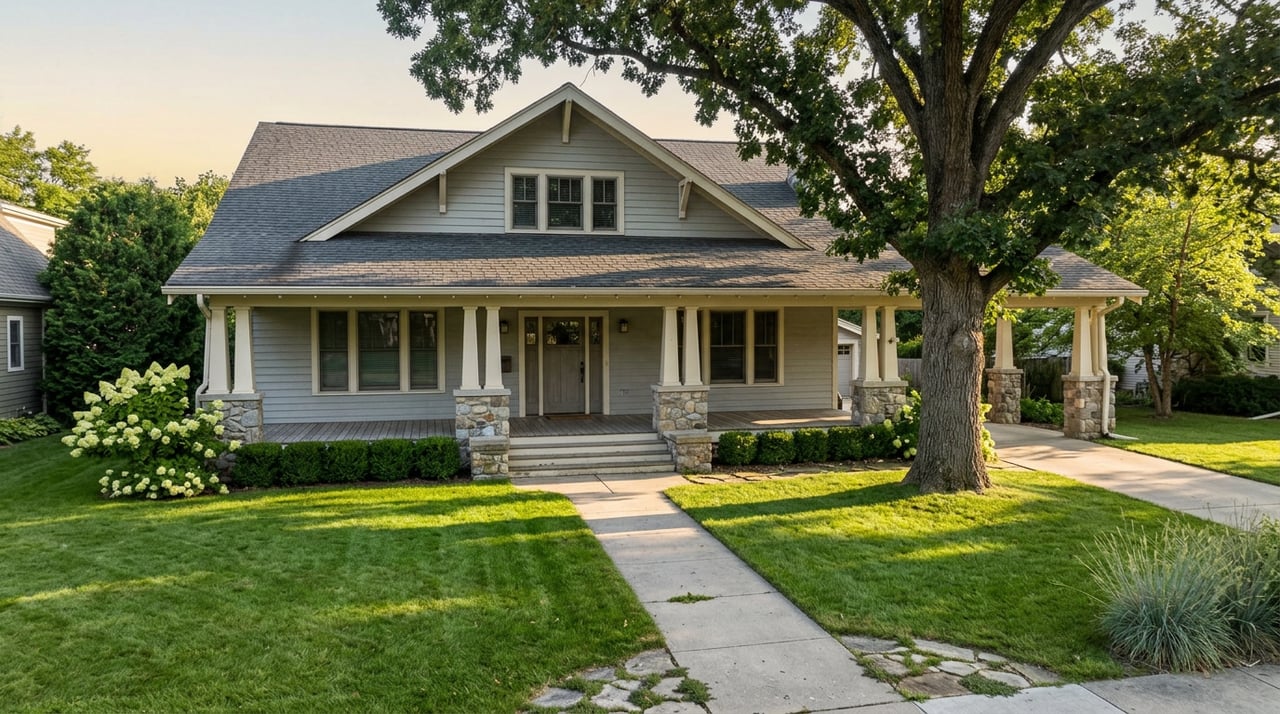
A buyer I worked with last spring almost waived it. Her inspector had flagged a $300 line item on the addendum, a sewer scope, and she asked me if it was really necessary or just something inspectors upsell because they can. The house was a 1938 bungalow off Indianola, exactly the kind of place Clintonville is full of. I told her to keep it. Three days later the footage showed root intrusion pushing through a joint in the clay lateral, forty feet out from the cleanout. We didn't walk. We renegotiated.
That $300 decision is the whole story of buying or selling in this neighborhood, and most people don't realize it's a decision at all until they're already three weeks into a contract.
The City Never Made It Mandatory
Some cities require a sewer lateral inspection before a home can change hands. Parts of California have ordinances that force a compliance certificate before closing, with the city literally holding the sale until a licensed contractor signs off. Columbus never built that backstop. There is no municipal requirement that a Clintonville seller scope the lateral, and no requirement that a buyer's lender demand it before funding a loan.
What that means in practice is that the entire question of whether anyone ever looks at that pipe rests on a private decision made during a home inspection contingency, usually by whichever side's inspector happens to recommend it. If the buyer's inspector doesn't flag it, or the buyer declines the add-on to save money and time, nobody looks. The house closes with a fifty-to-hundred-year-old pipe nobody has verified in decades, and the first anyone hears about it is when it backs up into a finished basement.
Why This Lands Harder Here Than in Newer Suburbs
Columbus-area inspectors who work Clintonville regularly describe it the same way: early-to-mid-century homes with mature trees, where sewer scopes and foundation movement are the recurring findings on every job. That combination, a housing stock built mostly before 1960 sitting under decades of tree canopy, is exactly the condition that turns a clay or cast-iron lateral into a liability. Roots follow moisture. A hairline crack in an eighty-year-old joint is an invitation.
Inspectors describing the wider Central Ohio market point to the same pattern in Bexley, the Heritage District in Westerville, and the Near East Side, older streets with mature landscaping where a lateral scope is treated as close to mandatory even though no ordinance says so. Clintonville sits squarely in that same category. Newer subdivisions in Hilliard or Grove City don't carry this risk the same way, because their pipes are younger and their trees haven't had sixty years to grow into the yard.
The pipe itself is invisible. A standard home inspection walks the crawlspace, checks the panel, tests the outlets, and never touches what's buried under the yard. The only way anyone finds out what's actually down there is a camera, and the only reason a camera goes down there is if someone pays for it.
What the $300 Actually Buys
Here's the asymmetry that matters. A seller who scopes the lateral before listing controls what happens next. If the line is clean, that becomes a selling point you can put in writing. If it isn't, the seller gets to choose: fix it on their own timeline and their own contractor, or price the home to reflect it and say so up front. Either way, they're negotiating from a position where they know something the buyer doesn't yet.
A buyer who skips the scope during due diligence gives up that same leverage permanently. Ohio purchase contracts don't typically leave the buyer recourse for a sewer defect discovered after closing unless the seller actively concealed a known problem. If nobody looked, nobody concealed anything. The cost of an undiscovered failed lateral lands entirely on the new owner, and full replacement or trenchless lining work runs into five figures.
| Scope before you commit | Skip it | |
|---|---|---|
| Cost to check | Roughly $300 for a standard pre-sale or pre-purchase scope | $0 upfront |
| What you learn | Exact pipe material, condition, and location of any defect | Nothing, until something backs up |
| Negotiating position | Seller can price it in or repair it; buyer can request credits or repairs | Neither side has anything to negotiate on |
| Cost if it fails later | Already priced into the deal | A lining repair can run around $12,000; a full undiscovered failure has run higher, with no seller recourse after closing |
The number that should stick with you isn't the $300. It's that the $300 is the only thing standing between "known and negotiated" and "unknown and yours."
The Wiring Rides Along With the Same Age Problem
The lateral isn't the only system that comes with the house's birth year attached. Homes built before 1950 are the classic candidates, and Ohio insurance agents have reported seeing knob-and-tube in homes built as late as the early 1960s, so a partial rewire is no guarantee the whole system came out. Most standard homeowners insurers won't write a policy on a home with active knob-and-tube in place. The carriers that will typically charge noticeably more, and some buyers end up routed to the Ohio Fair Plan, the state's insurer of last resort, if no standard market will touch the property.
This matters at the exact moment it's hardest to deal with, during financing. A lender won't close without proof of insurance, and an insurance company won't quote a normal policy on a house with unresolved knob-and-tube. That can turn what looked like a straightforward Clintonville purchase into a scramble for a rewire quote or a specialty carrier with days left before closing. The fix is the same instinct as the sewer question: find out early, not at the financing deadline.
What This Actually Means for You
If you're listing a Clintonville home built before 1960, get the lateral scoped before you put up the sign. It costs a few hundred dollars and either clears the pipe as a non-issue or hands you the chance to fix it or price around it on your own schedule. Ask your electrician the same question about the wiring while you're at it. Buyers researching insurance quotes will find out either way. Better they find out from your disclosure than from their own inspector.
If you're buying, don't treat the sewer scope line item as an upsell. Ask specifically whether the inspector can identify the pipe material and whether they saw any root intrusion or offset joints. If the home was built before 1950, ask directly whether any original wiring remains, and get an electrician's estimate before you're staring down a closing date with an insurance company that won't quote you.
Franklin County also sits in the EPA's Zone 1 radon category, meaning homes here have some of the highest odds of testing above the action level. It's a separate system from the pipe and the wiring, but it belongs on the same list of things worth checking before you're locked into a date, not after.
A Few Questions I Hear Often
Does Columbus require a sewer inspection before a home can sell? No. There's no city or county ordinance in Franklin County that mandates a lateral inspection or certificate at the point of sale, unlike some other U.S. cities. Whether the pipe gets checked depends entirely on what's negotiated into the purchase contract.
How old does a house need to be before knob-and-tube wiring is a concern? Homes built before 1950 are the most likely to still have some original knob-and-tube, and some Ohio agents have documented cases where it was installed as late as the early 1960s. A partial rewire doesn't guarantee the whole system was replaced. An electrician can confirm what's actually behind the walls.
Is a sewer scope worth it on a home that's never had a problem? Clay and cast-iron laterals fail from the inside, invisibly, long before a homeowner notices a slow drain. A scope is the only way to see the pipe's actual condition rather than guess based on how the house has behaved so far.
If you're weighing a purchase in Clintonville, or getting ready to list a home that's been in the family for decades, I'd rather walk you through what to check before you're under a deadline than after. That's the kind of groundwork Sarah Berlin Moore builds into every Clintonville transaction. Let's Connect.